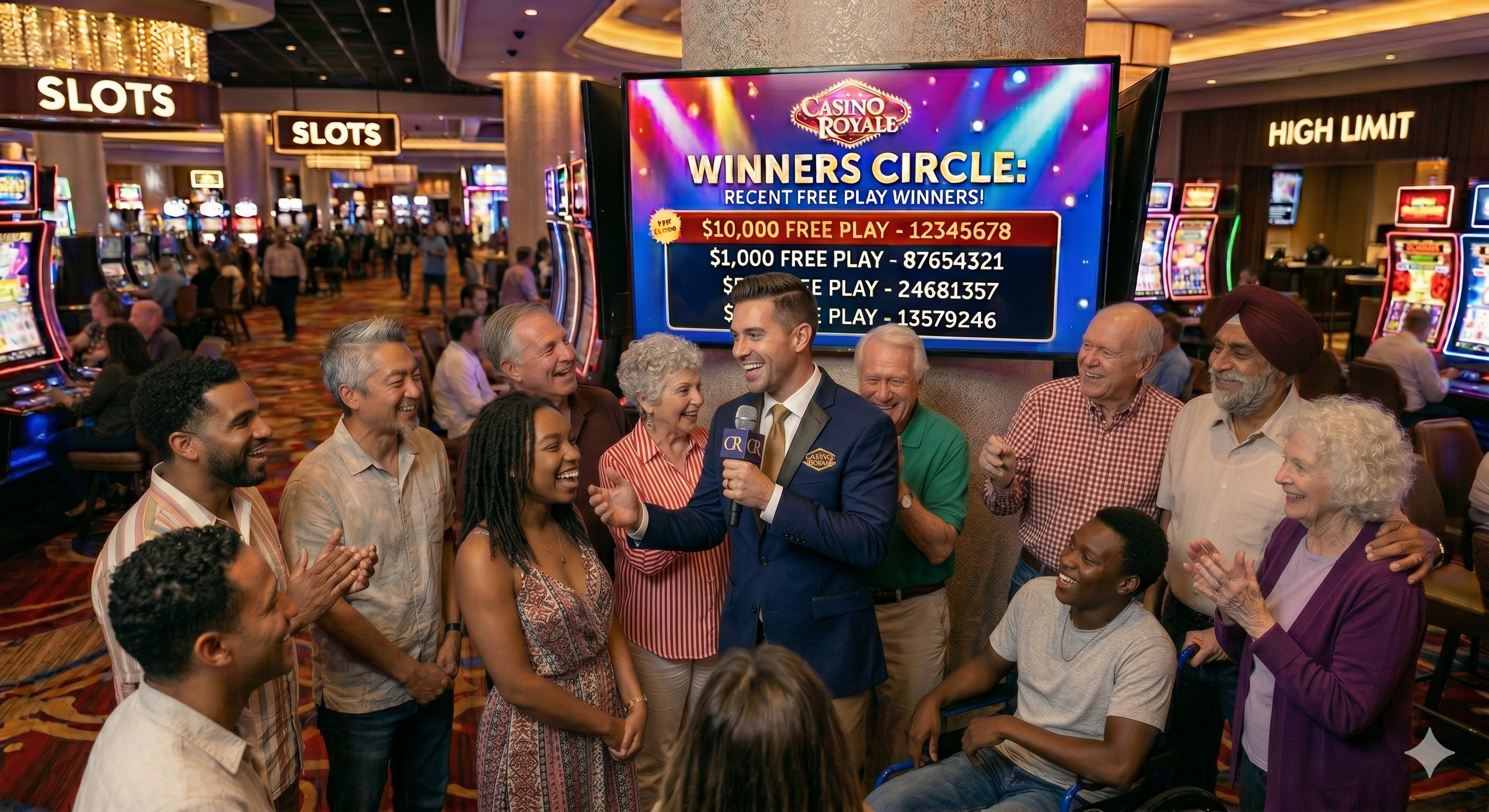
Most people think of Promo on Demand as a system where customers initiate their own game play — scanning a QR code, clicking a link, or visiting a campaign URL on their own device. And that's absolutely true for Campaign-based promotions. But there's a second, equally powerful mode built into the platform: employee-controlled play, where an employee selects the game and walks up to the customer to let them play directly on a company tablet.
This distinction matters enormously. Employee-controlled interactions aren't self-service. They're a personal, high-touch moment where your staff delivers a live reward experience directly to a customer — in their seat, at their table, in the lobby, or even at the front door. The result is a feeling of genuine surprise and delight that self-service campaigns simply cannot replicate.
Key distinction: Employee-controlled interactions use Promo on Demand's frontend user flow — always initiated by a staff member first. The employee logs in, selects the game, then hands the device to the customer to play. This approach is ideal for reward mechanics where the employee chooses which customer receives the experience, rather than customers self-selecting.
A Different Kind of Promotion
The most memorable customer experiences share a common trait: they feel personal. When a casino host walks up to a player and says, "You've been here all afternoon — let me give you something special," that interaction carries a weight that a generic promotional email never will. It says: we see you, we value you, and we're rewarding you specifically.
Employee-controlled game play operationalizes that feeling at scale. Instead of relying entirely on staff personality and discretionary gift-giving (which varies wildly by employee), Promo on Demand gives every team member a consistent, engaging, and auditable tool to deliver that experience. The game adds excitement and theatrical flair. The prize closes the loop with real value. And the employee gets credit for initiating a moment of genuine joy.
This model also benefits the business operationally. Employee-initiated plays are logged in the system, creating a clear record of who received what reward, when, and in which context. That data is invaluable for understanding your most engaged customers and the circumstances that drive the highest satisfaction.
How Employee-Controlled Play Works
The workflow is designed to be as fast and friction-free as possible for staff:
- The employee logs into the Promo on Demand platform on a company tablet or phone using their frontend user credentials
- They select the game configured for the current promotion — or choose from a menu of available games
- They approach the customer and present the device: "Here, I'd like to give you a chance to win something"
- The customer plays the game directly on the employee's device — tapping the screen, spinning the wheel, or interacting with the game interface
- The prize displays immediately on the screen; the employee explains how to redeem it
- The session is logged automatically — no additional data entry required
The entire experience typically takes under two minutes. The customer walks away with a prize and a story. The employee walks away having delivered a memorable moment with minimal effort.
Casino Floor Applications
The casino floor is where employee-controlled play was born, and it remains one of the richest environments for this approach. Here are the most impactful applications:
Hot Seat Rewards
The hot seat concept — randomly selecting a player on the floor to receive a reward — is a staple of casino marketing. Traditionally, this involves a PA announcement and a floor staff member walking to the selected machine with a paper voucher. Promo on Demand transforms this into an interactive experience.
Instead of handing over a predetermined prize, the floor ambassador brings a tablet to the hot seat winner and says: "Congratulations — you've been selected for today's hot seat. Here's your chance to see what you've won." The customer plays the game — spinning a wheel, revealing a card, opening a mystery box — and the prize appears dynamically. Even if the outcome is predetermined (via one-to-one prize mapping), the theatrical reveal creates a far more memorable moment than a paper voucher.
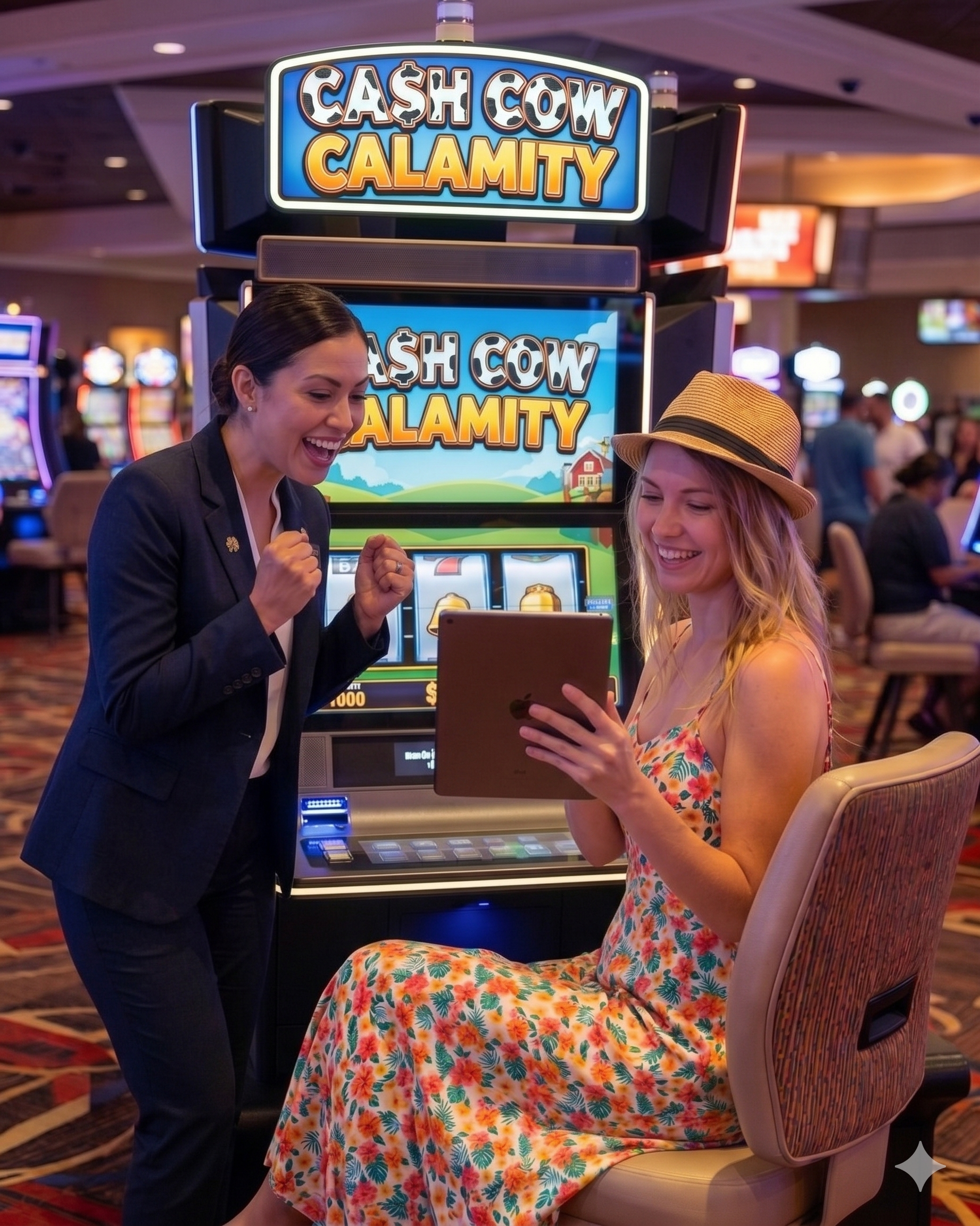
Critically, this can happen without the player leaving their machine. The employee brings the experience to the customer. There's no interruption to their gaming session, no walk to the players club desk, and no risk of losing their seat. Customer satisfaction consistently tracks higher with in-seat hot seat delivery than with desk-based redemption.
Time-on-Machine Rewards
Reward players who have been sitting at a machine for an extended period — say, two or three hours — with a spontaneous game play offer. This approach serves two goals simultaneously: it rewards the loyalty of extended players, and it re-energizes their session at a moment when fatigue or frustration might otherwise cause them to leave.
Floor staff equipped with tablets can identify eligible players via the players club system or simply by observation, then deliver a reward play as a "thank you for being here" gesture. The prize can be anything from free dining to drawing entries to additional free play — whatever fits your promotional budget for that day or shift.
Casino Host Relationship Building
Casino hosts manage relationships with high-value guests — the players who generate the most revenue for the property and who have the most options about where to spend their time. These are the customers for whom a generic promotion feels almost insulting. They expect personalization.
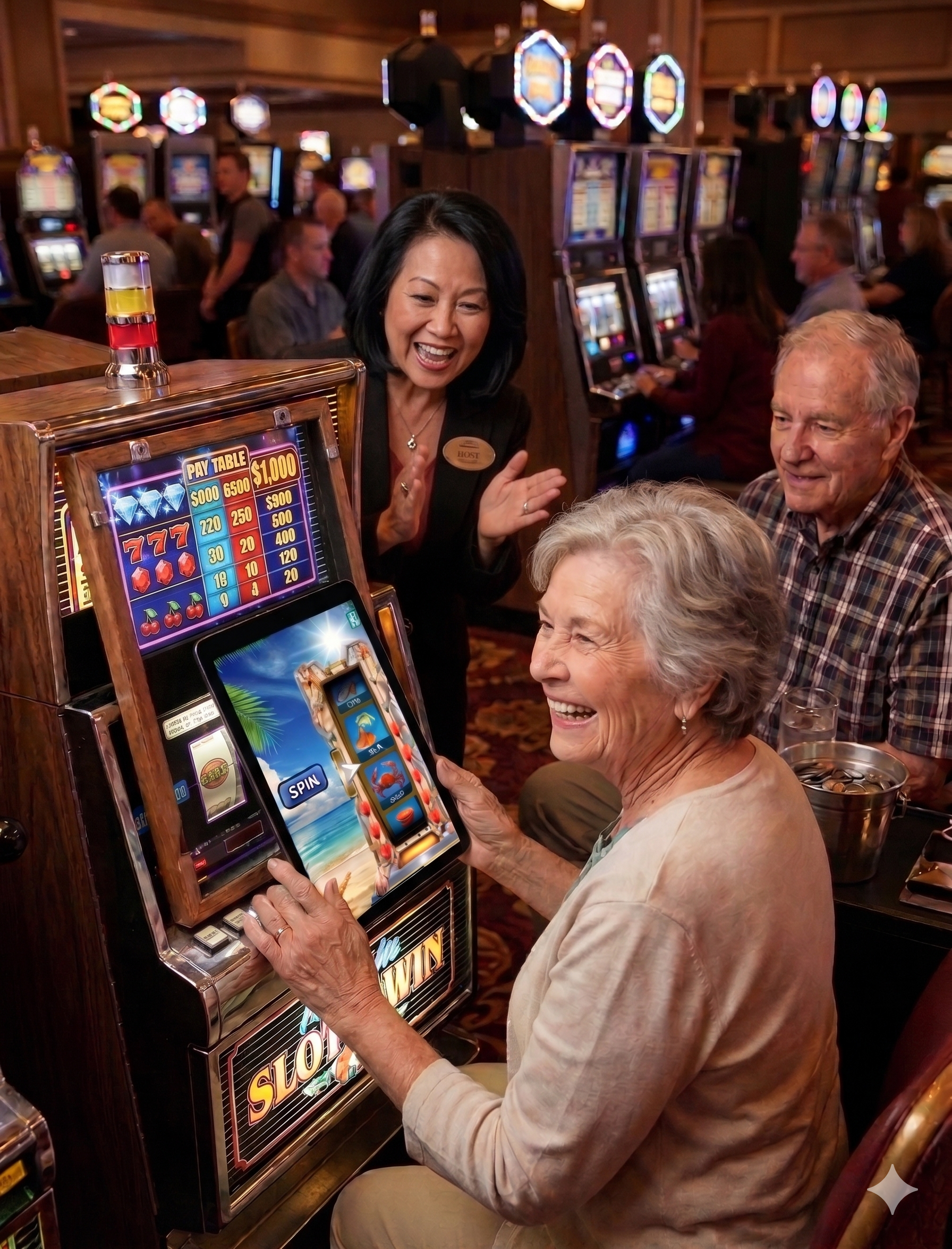
Employee-controlled play gives casino hosts an elegant, personalized tool for relationship maintenance. When a host wants to thank a valued guest for their patronage — especially without a specific trigger event like a birthday or anniversary — walking up with a tablet and offering a live game play signals thoughtfulness and attentiveness. The host controls who receives the experience, when, and in what context. The system handles the logistics, the prize delivery, and the audit trail.
Cruise Ships & Hospitality Environments
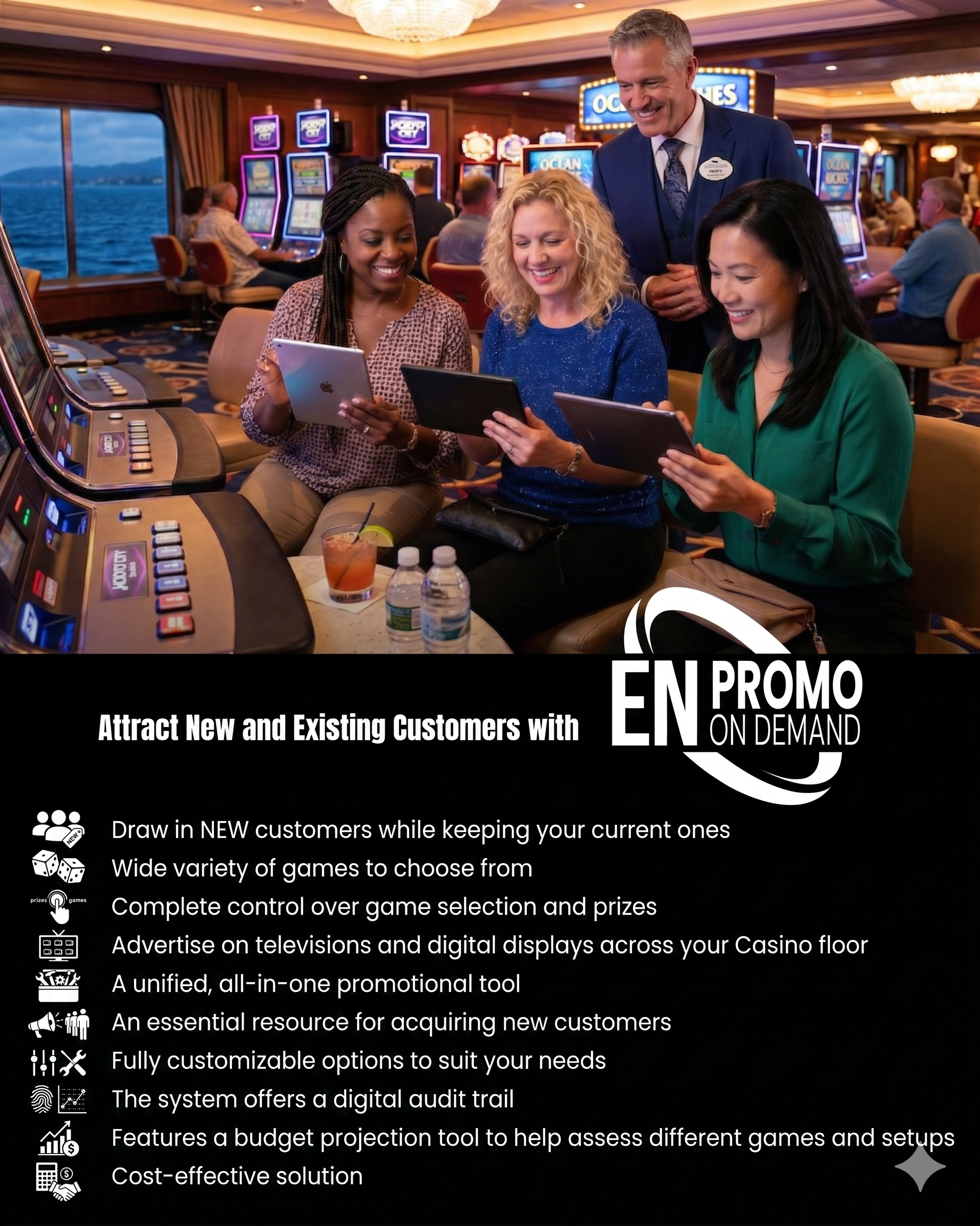
The employee-controlled model travels exceptionally well beyond the traditional casino floor. Cruise ship casinos are a perfect example: passengers may have different playing patterns, the environment is inherently social and entertainment-focused, and the physical layout often makes PA-based hot seats impractical.
On a cruise ship, a floor ambassador can circulate through the gaming area with a tablet, selecting players for spontaneous reward experiences. The same logic applies to hotel casinos, resort properties, and any entertainment venue where the guest experience is a primary differentiator. In these environments, the tablet becomes a prop in the guest experience — visible, appealing, and often a conversation starter with other nearby guests.
Retail & Non-Gaming Use Cases
Employee-controlled game play isn't limited to casino floors. The core mechanic — an employee selecting a customer and delivering a live prize experience — translates powerfully to any customer-facing business:
Retail Customer Service Recovery
When a customer has a difficult experience — a long wait, an out-of-stock item, a billing issue — the instinct is to offer a discount or apology. Employee-controlled play lets you offer something more memorable: "I'm sorry about the wait. Let me give you a chance to win something as a thank you for your patience." The game transforms a negative moment into a positive surprise. Customers who receive this treatment consistently report higher satisfaction scores than those who receive a straightforward discount.
Loyalty Milestone Recognition
When a POS system or loyalty program identifies that a customer has reached a milestone — their 10th visit, their first $500 purchase, their anniversary with your brand — a floor staff member can be alerted and approach the customer with a game play offer. "Congratulations on being a customer for three years — we'd like to celebrate with you." This turns a data point into a human moment.
In-Store Event Activations
During special events — product launches, seasonal sales, grand reopenings — employee-controlled play gives you a roving engagement tool that can work anywhere in the store without requiring fixed kiosks or signage. Staff members circulate through the crowd, selecting customers for game plays that deliver event-specific prizes. The game adds an entertainment layer to the event that amplifies the overall atmosphere.
Customer Acquisition at the Door
One of the most creative applications of employee-controlled play has nothing to do with existing customers — it's about acquiring new ones entirely.
Picture an employee standing at the entrance to a retail location on a busy Saturday afternoon. They're not handing out flyers or asking people to sign up for loyalty cards — they're holding a tablet and offering passersby a chance to play a game. "Want to try your luck? We're giving away prizes today." There's no commitment required, no personal information to fill out. Just scan or tap and play.
If the customer wins a prize that requires entering the store to redeem — and many will — you've converted a sidewalk passerby into a walk-in customer. If they don't win a prize this time, they still had a positive interaction with your brand that makes a future visit more likely. Either way, the cost of acquisition through this method is dramatically lower than traditional advertising, and the engagement quality is far higher.
This approach works particularly well in:
- Shopping mall concourses where foot traffic is high and conversion is the challenge
- Outdoor markets and street festivals adjacent to your location
- Convention and trade show floors where booth traffic is competitive
- Airport retail and food concepts where travelers have time but low brand familiarity
Selecting the Right Games & Prizes
The game and prize combination you choose for employee-controlled interactions should reflect the context of the delivery. A hot seat reward in a high-energy slot area calls for a different game than a quiet, personalized casino host interaction. Consider the following:
- High-energy, visual games (spinning wheels, slot-style reveals) work best in public settings where the surrounding players can see the excitement — creating social proof and envy
- Elegant, understated games (card reveals, mystery box games) feel more appropriate for private, one-on-one host interactions where the emphasis is on the relationship, not the spectacle
- Guaranteed prize configurations (one-to-one player mapping) are essential when you need to ensure a specific outcome — for VIP guests, host interactions, or service recovery scenarios where an uncertain result would undermine the intent
- Odds-based configurations work well for floor-wide hot seat programs where you're managing prize expense across a large pool of recipients
Training Your Team for Success
The quality of an employee-controlled interaction depends heavily on how staff deliver it. The best approaches share these characteristics:
- Personalization in the approach: Reference something specific — "You've been here a while," "I saw you earlier with your family," "It's a special day for us today." The more personal the intro, the more memorable the experience.
- Energy matching: Match your tone to the customer's. An excited, celebratory approach works for a hot seat moment; a quieter, appreciative tone fits a VIP host interaction.
- Explaining the prize clearly: After the game, walk the customer through exactly what they've won and how to redeem it. Ambiguity here deflates the moment.
- Leaving on a high note: The last thing you say should reinforce the relationship. "Enjoy the rest of your evening" or "We hope to see you back soon" closes the loop warmly.
Consider building a short training module — even just 10 to 15 minutes — into your onboarding for any staff who will be using the employee-controlled play feature. The return on that investment in customer satisfaction and loyalty metrics is substantial.
Getting Started
Setting up employee-controlled interactions requires configuring frontend user accounts for your staff and ensuring the right games and prizes are loaded and ready. Here's the quick path:
- Work with your Promo on Demand administrator to set up frontend user accounts for the staff members who will be delivering game plays
- Configure the game(s) for the promotion — including prize structure (odds-based or one-to-one mapping) and any custom themes
- Brief your staff on the delivery approach and the prize redemption process
- Equip each participating staff member with a company tablet or phone loaded with the Promo on Demand app or browser bookmark
- Launch — and let your team start delivering memorable moments
Questions about the best setup for your venue or industry? Contact our team — we've helped businesses across dozens of industries design employee-controlled programs that drive measurable results.