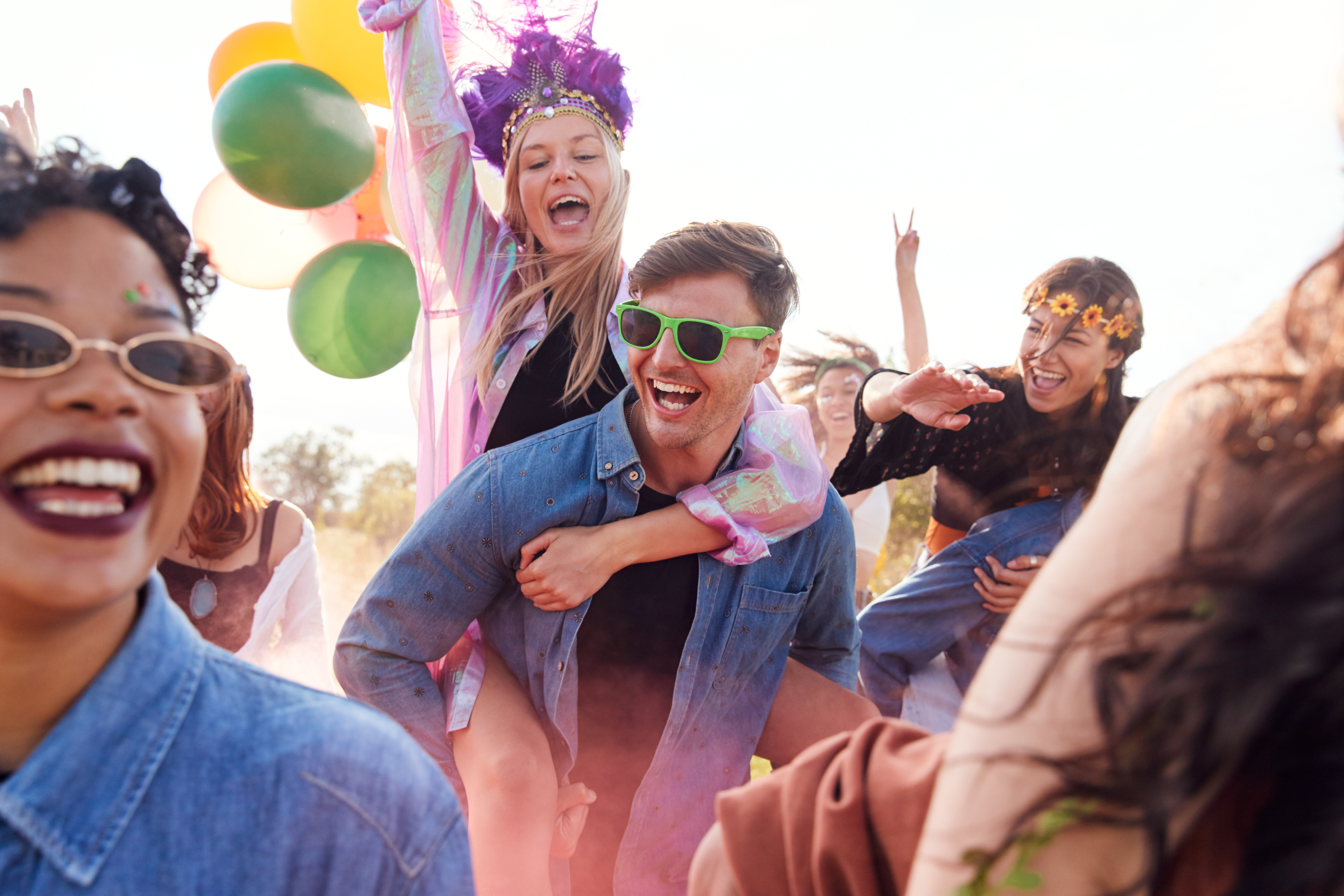
Fairs, festivals, community events, and outdoor markets represent one of the most concentrated opportunities in local marketing: thousands of people — already in a social, exploratory, and receptive mindset — gathered in a single location. The challenge isn't the size of the audience. It's the competition for that audience's attention, the brevity of every interaction, and the near-impossibility of creating a meaningful connection with someone in the ten seconds they spend walking past your booth.
Promo on Demand campaigns change that calculation fundamentally. Instead of trying to explain your business in ten seconds, you offer something immediate and exciting: a chance to play and win. The game creates engagement in seconds. The prize creates motivation. The follow-up email creates the bridge from the event to your front door. What began as a brief encounter at a county fair becomes a first visit to your location.
The event mindset advantage: People at fairs and festivals are already in a "try something new" mindset. They're exploring, open to experiences, and unlikely to say no to a fun, low-commitment interaction. That psychological state makes event environments uniquely receptive to game-based acquisition approaches that would perform less well in everyday contexts.
The Fairground Opportunity
Consider what a county fair or regional festival actually represents from a marketing perspective. A mid-sized county fair might draw 50,000 to 100,000 visitors over a weekend. A large state fair can reach 500,000 or more across its run. A regional music festival might draw 20,000 per day. These are audiences that would cost tens of thousands of dollars to reach through traditional advertising — and at a fair, they're physically present, in good spirits, and actively seeking engagement.
The businesses that thrive at events aren't necessarily the ones with the biggest booth or the most elaborate display. They're the ones with the most compelling reason to stop — and game-based engagement is one of the most powerful stop-signals in any environment. People are drawn to other people playing games. They're drawn to the energy of anticipation, the sound of a winning notification, the sight of someone discovering a prize. This social proof effect is inherent to game-based promotions and works in your favor the moment the first player engages.
Cutting Through the Noise
Event environments are sensory-saturated. Music, food smells, competing vendors, and crowd noise all compete for attention simultaneously. Traditional tactics — flyers, brochures, branded merchandise — have diminishing returns when everyone else is doing the same thing. What breaks through in a noisy environment is novelty, simplicity, and immediate reward.
Game-based acquisition nails all three. The QR code on your signage creates visual curiosity ("What is that?"). The simple message ("Scan to Win") communicates immediately and requires no explanation. And the prize creates the payoff that makes the interaction worth the thirty seconds it took. Compare that to the experience of picking up a flyer, reading about a business, and being asked to remember a website URL — there's no contest.
For maximum cut-through in busy event environments:
- Use large-format signage with minimal text — one headline, one QR code, one prize teaser
- Make your signage three-dimensional or interactive where possible — banners blow in the wind and get ignored; a display with a large QR code and motion elements draws the eye
- Position signage at natural traffic pinch points — entry and exit paths, food service queues, restroom approaches
- Use multiple touchpoints throughout the event space, not just at your booth
- Pair signage with a live employee presence who can invite passersby to scan
QR Code Signage Strategy for Events
The QR code is your primary tool at events, but its effectiveness depends heavily on placement, size, and context. Here are the proven principles for event QR deployments:
- Go large: In crowded outdoor environments, QR codes should be printed at a minimum of 20 cm × 20 cm — larger if the display permits. People scanning from three to five feet away need a code they can comfortably frame with their camera.
- Eye-level placement: Mount QR codes between 1.2 and 1.6 meters from the ground. Above or below that range requires an uncomfortable scanning angle that reduces conversion.
- Weatherproofing: Outdoor events mean potential rain, wind, and sun. Use laminated prints or weather-resistant vinyl to ensure codes remain scannable through the event's duration.
- Redundancy: Post the campaign URL or a short vanity URL alongside the QR code. Some visitors — particularly older demographics — may not be comfortable with QR scanning. The URL gives them an alternative path.
- Multiple locations: If permitted by the event organizer, place campaign signage at multiple points throughout the event grounds — not just at your primary booth location.
Getting Attention in Loud, Busy Environments
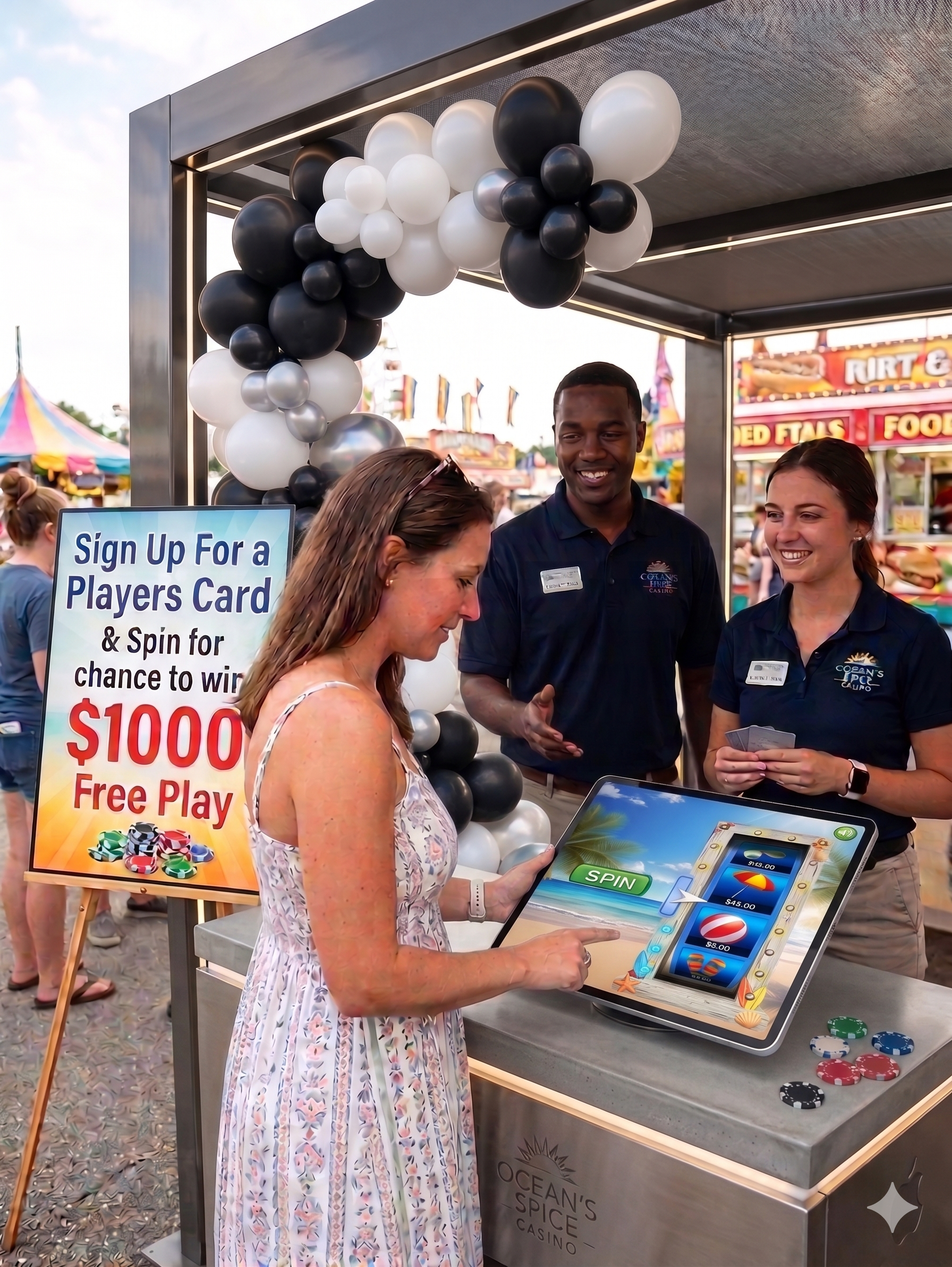
Beyond signage, your human presence at an event is the most powerful engagement tool you have. Staff equipped with tablets running the Promo on Demand employee-controlled play mode can circulate through the event, inviting people to play directly on the device. This removes the friction of scanning entirely — the interaction starts with a face-to-face invitation and a device already in game mode.
Other high-impact attention strategies for event environments:
Live Game Play Displays
If your booth includes a monitor or TV, cast a live Promo on Demand game session to the screen. Passersby who see someone playing — especially if the game has vibrant graphics and visible prize reveals — will stop to watch. That audience of observers becomes your next pool of participants. The sight of someone winning something is one of the most powerful organic recruitment tools available.
Crowd-Gathering Moments
Schedule brief "prize giveaway moments" at your booth at set times — every hour on the half hour, for example. Announce over a portable PA or megaphone: "We're giving away [prize] to someone who scans our QR code in the next five minutes." The urgency creates a crowd. The crowd creates more interest. One planned moment can generate twenty interactions in the time it would take to have five individual conversations.
Roving Staff with Employee-Controlled Play
Rather than waiting for the crowd to come to you, send staff into the crowd with tablets. They identify prospects — families with children who look engaged, couples browsing nearby vendors, individuals standing alone waiting for companions — and offer a game play as a conversational opener. The success rate of a face-to-face game invitation at an event dramatically exceeds that of passive signage alone.
Lead Capture & Data Collection
One of the most valuable aspects of event-based campaigns isn't the immediate game play — it's the lead data it generates. When a visitor scans your QR code and plays the campaign game, they may enter their name, email address, and phone number to claim their prize. That information is captured in your Promo on Demand campaign data and can be exported for follow-up marketing.
Even for visitors who don't win a prize, the campaign creates a brand touchpoint — a positive interaction logged against a contact record. For visitors who do win, the redemption requirement (visiting your physical location) creates a natural follow-up trigger.
To maximize the quality of your lead capture:
- Ensure the prize requires in-person redemption — this validates that the contact information is accurate (people won't give a fake email if a prize is waiting at the end)
- Make prize redemption time-bounded — "Valid for 30 days from today" creates urgency that drives actual visits rather than letting intentions evaporate
- Include an optional opt-in for marketing communications during the game flow — event participants who've had a positive experience are highly receptive to staying in touch
Follow-Up: From Fair to Front Door
The event is the beginning of the acquisition journey, not the end. The real value of a well-run event campaign is what happens in the two to four weeks after the event closes. Here's a follow-up sequence that consistently drives conversions:
- Day 1 (same day as event): Automated "Thank you for playing" email with a reminder of their prize and redemption instructions. Keep this brief and friendly — don't oversell.
- Day 3–5: A soft nudge email — "Your prize is still waiting for you." Include a map to your location, your hours, and a specific call to action.
- Day 10–14: A more compelling follow-up for non-redeemers: "Last chance to claim your prize" with the expiration date prominently featured. Add a secondary incentive if needed — "Plus get 10% off your first purchase when you come in."
- Day 30: For contacts who haven't converted, transition them into your regular marketing sequence — newsletter, seasonal campaigns, or a new Promo on Demand campaign tailored to first-time visitors.
This sequencing approach has shown consistent post-event conversion rates of 15–30% for businesses with well-designed campaigns and compelling redemption offers — dramatically outperforming traditional event marketing follow-up.
Festivals, Markets & Community Events
Different types of events call for slightly different campaign strategies:
Farmers' Markets & Artisan Fairs
These environments attract a quality-conscious, community-oriented demographic that responds well to locally-rooted messaging. Frame your campaign as a community celebration: "We love [city name] — scan to win a local prize." Prizes that reflect the local character of your business — a gift basket of local products, a gift card to a beloved local restaurant — resonate more strongly than generic rewards in this context.
Sports & Recreation Events
Running races, outdoor sports tournaments, youth league championships, and similar events attract an active, engaged demographic. A campaign tied to the event — "Scan at the finish line to win" or "All participants play free" — creates a natural connection between the event experience and your brand. Sports event participants are especially open to experiences that reward their effort with an element of fun and surprise.
Cultural & Heritage Festivals
Community cultural events draw multigenerational audiences — grandparents, parents, and children attending together. Design campaigns that work across demographics: simple, visually engaging games that a 70-year-old and a 12-year-old can both appreciate. Prizes with broad appeal — dining credits, entertainment vouchers, merchandise — perform best in multigenerational crowds.
Music Concerts & Large-Scale Events
Large-scale events — music concerts, outdoor festivals, major sporting events — present the biggest acquisition opportunity and the biggest challenge simultaneously. The audience is enormous; the competition for attention is fierce; and the typical attendee's mindset is fully focused on the entertainment, not on discovering new businesses.
The most effective approach at large-scale events is pre-event and post-event campaign deployment rather than in-event execution. Use your campaign QR code in sponsored content around the event — on event programs, sponsor signage at the venue entrance, and pre-event email communications from the event organizer. Participants discover the campaign before or after the main event, when their attention is more available.
During the event itself, focus on high-dwell-time locations: food service queues, merchandise stands, restroom corridors, and VIP areas where event traffic is predictable and unhurried. Participants waiting in line have exactly the engagement window your campaign needs.
Seasonal Campaign Ideas
Events are inherently seasonal — and seasonal campaigns that align with the event calendar create natural urgency and thematic relevance. Here are high-performing seasonal event campaign concepts by time of year:
- Spring: Community garden shows, Easter events, spring arts festivals — "Spring into Savings" campaigns with fresh, bright prize themes
- Summer: County fairs, outdoor concerts, beach festivals — high-energy campaigns with summer experience prizes (entertainment, dining, outdoor recreation)
- Fall: Harvest festivals, Halloween events, fall farmer's markets — themed campaigns with seasonal prize packages
- Winter/Holiday: Holiday markets, light shows, New Year's events — gift-oriented campaigns where the prize feels like a gift rather than a promotional reward
Getting Started
Planning your first event acquisition campaign? Here's a streamlined approach:
- Identify the next event in your area where your target customers will be present in volume
- Create a Campaign in your Promo on Demand admin dashboard — set dates to cover the event period plus a 30-day follow-up window
- Configure a prize that requires in-person redemption at your location
- Design your event signage with the generated QR code — prioritize size, simplicity, and scanability
- Brief your event staff on the game play experience and the prize redemption process
- Collect contacts and run your follow-up email sequence in the weeks after the event
Need help designing an event campaign strategy for a specific upcoming event? Contact our team — we'll help you build a plan that converts that foot traffic into lasting customer relationships.