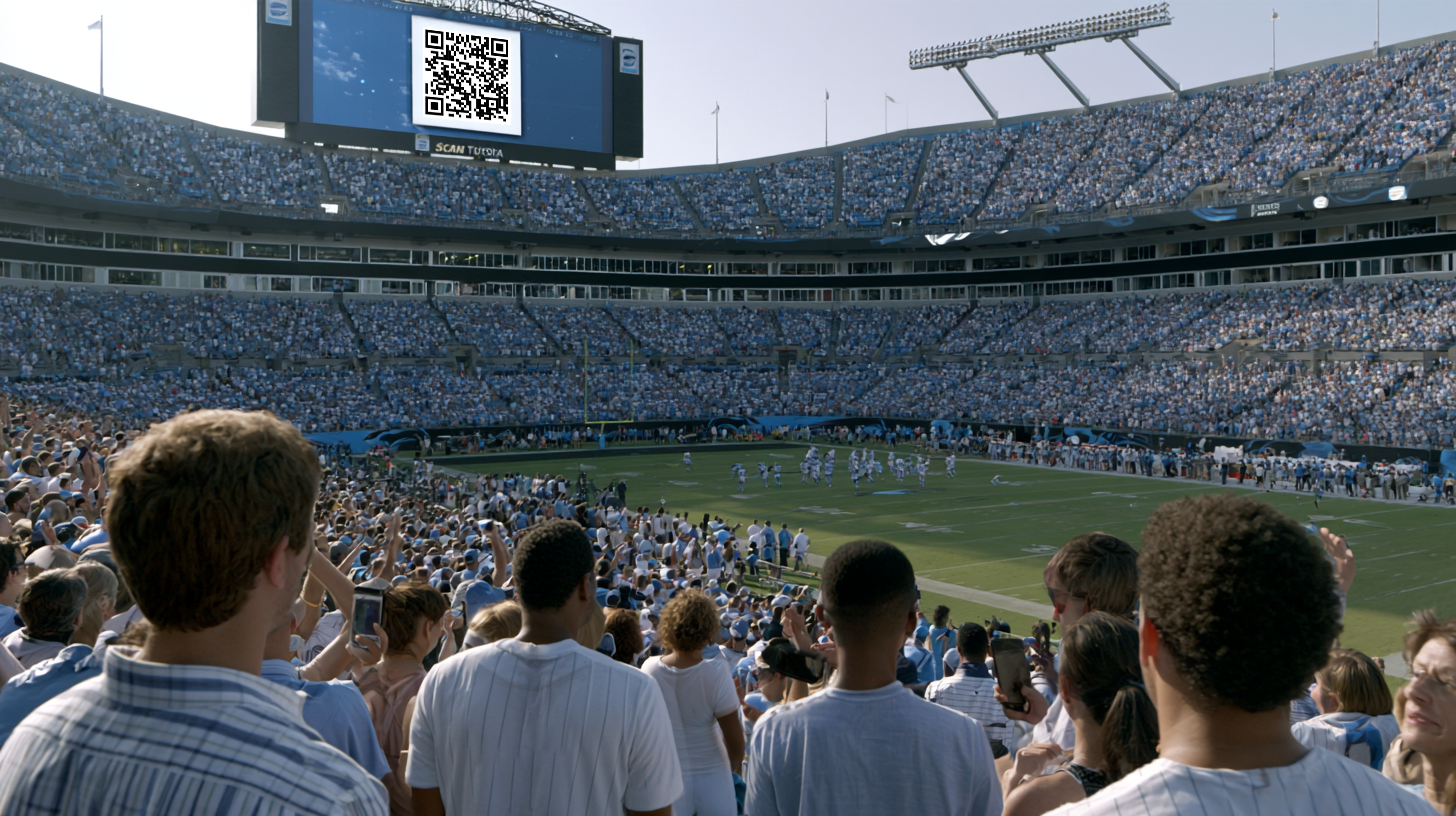
There's no marketing medium more powerful than a live crowd at full energy. Tens of thousands of people, united by a shared experience, all looking at the same screen at the same moment — it's a level of coordinated attention that no digital advertising platform can replicate. And for decades, that attention has been largely wasted on passive advertising: a logo, a sponsor mention, a 15-second commercial playing to an audience half-distracted by the action on the field.
Promo on Demand campaigns change what's possible at live events. By displaying a campaign QR code on a jumbotron — or through any number of alternative engagement channels — you transform tens of thousands of passive spectators into active participants, all playing simultaneously, in real time, on the devices already in their hands. The energy of a live crowd becomes a promotional vehicle. The shared experience of playing together becomes a marketing moment.
The simultaneity effect: When thousands of people play the same game at the same time, something remarkable happens — the experience becomes social. Friends compare prizes, strangers discuss what they won, and the buzz of shared participation spreads organically through the crowd. No other promotional format creates this dynamic at scale.
The Power of a Live Crowd
Live events represent one of the most coveted environments in marketing for a simple reason: people are physically present, emotionally engaged, and temporarily freed from the distractions of daily life. A fan at a baseball game isn't checking work emails during the second inning. A concert-goer at an outdoor festival isn't thinking about their grocery list during a set break. The live event context creates a heightened state of presence and receptivity that brands pay enormous premiums to access.
Traditional approaches to capturing that attention — scoreboard ads, PA announcements, branded LED ribbon boards — create awareness but not engagement. Awareness is passive; it can be forgotten the moment the crowd's attention returns to the field. Engagement is active; it creates a memory, an interaction, and often a data point (contact information, prize won, redemption action taken) that persists long after the final buzzer.
The economic opportunity here is substantial. If 10% of a 20,000-person crowd scans a QR code from a jumbotron display, that's 2,000 new campaign plays — 2,000 brand interactions — in the span of a two-minute halftime or between-inning break. At a per-lead acquisition cost, that's a marketing efficiency that would be difficult to achieve through any other channel.
QR Code on the Jumbotron
The most straightforward implementation is displaying your campaign QR code directly on the jumbotron or scoreboard display during a designated break. There are several keys to making this work effectively:
Code Size & Display Duration
For a stadium jumbotron display, QR codes need to be significantly larger than standard print sizes — ideally occupying at least 30–40% of the screen area. The challenge is that fans in upper decks may be 200 to 300 feet from the display, and the angular size of the code from that distance determines scanability.
Display duration is equally critical. A QR code shown for five seconds is not scannable by most fans — they need time to locate the code, orient their camera, and wait for the device to recognize it. Target a minimum of 30 seconds of display time; 45 to 60 seconds is better. If you're running a halftime campaign, consider displaying the code for the full duration of the break rather than a brief sponsored slot.
Pairing the Visual with Audio
A PA announcement paired with the jumbotron display dramatically increases scan rates. A brief, energetic announcement — "Point your camera at the scoreboard right now and play to win free play at [sponsor name]!" — directs the crowd's attention simultaneously to the display and explains what to do. The combination of visual and audio cues more than doubles engagement compared to the jumbotron display alone.
Countdown Timer
Add a countdown timer to the jumbotron display: "45 seconds left to scan." This creates urgency that drives immediate action. Fans who are hesitating — "Should I pull out my phone?" — are pushed toward action by the ticking clock. Urgency is one of the most reliable behavioral triggers in promotional marketing.
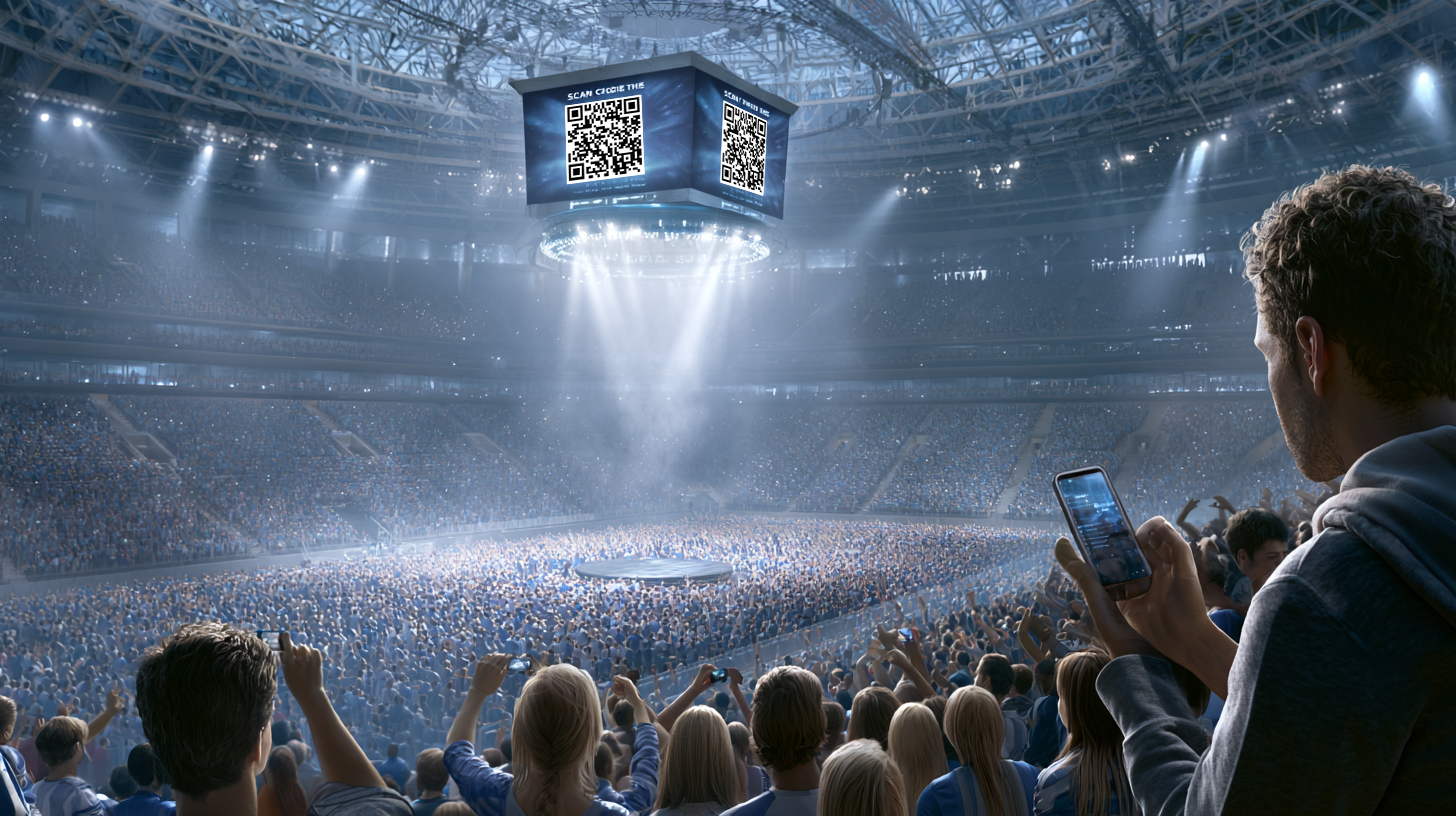
Beyond QR: Alternative Engagement Methods
QR codes are the primary tool for jumbotron campaigns, but they're not the only option. Several alternative engagement channels can complement or replace QR codes depending on your venue, audience, and event type:
Short Vanity URLs & Text Codes
Display a simple, memorable URL alongside the QR code: "Go to WinNow.com/arena" or "Text WIN to 55555." Short vanity URLs are particularly valuable for audiences in upper decks who can't scan from distance, and for demographics who are less comfortable with QR scanning. Text-to-URL services can redirect a texted keyword directly to your campaign page.
PA-Announced Game Codes
For small to medium venues — minor league stadiums, local arenas, club-level events — the PA announcer can verbally announce a campaign code: "Enter code GOALPOST at our game page to win today's prize." This requires minimal technical coordination and works even when the venue's display capabilities are limited.
In-App Campaign Integration
If the venue or event has an official mobile app, coordinate with the app publisher to include your campaign link or banner within the app's game-day experience. Fans who are already using the app for concession orders, seat upgrades, or live stats can be reached with a campaign prompt without requiring them to scan anything externally.
Social Media Activation
Live events have highly active social communities — fans posting, sharing, and tagging during the game. A campaign promoted through the event's official social channels during the game ("Scan the code on the scoreboard RIGHT NOW to win — link in bio") reaches fans who are already on their phones and already in event mode.
Real-Time Mass Participation
One of the most exciting possibilities of jumbotron campaigns is the experience of thousands of people playing simultaneously. When a campaign is live and a jumbotron display drives a surge of scans, the campaign dashboard updates in real time — you can see the wave of engagement as it happens. For venues with live data displays, showing an engagement counter on the scoreboard ("2,347 fans have played so far!") creates social proof that drives even more participation.
Real-time participation dynamics also create organic social content. Fans who win exciting prizes immediately share them on social media, tagging the venue or sponsor. Other fans who see the posts are incentivized to play if they missed the window — or to look for the next opportunity at the next home game.
Halftime & In-Game Activations
The most valuable windows for live event campaigns are the natural breaks in action:
- Halftime / intermission: The single best window — captive audience, extended dwell time (typically 12–20 minutes), and lower ambient noise (music rather than game sound). Use the full break: a PA announcement at the start, jumbotron display throughout, and a prize reveal moment at the end that generates buzz going into the second half.
- Between innings / periods: Shorter windows (2–5 minutes) that work well for simple, fast-resolving campaigns. A single spin or card reveal is perfectly sized for these breaks.
- Timeouts and media timeouts: The most frequent but shortest windows. Best used for awareness ("Campaign is live — scan the scoreboard to win") rather than expecting the full play flow to complete in 60 seconds.
- Pre-game: Fans arriving early and settling into their seats are in a relaxed, engaged state with nothing competing for their attention yet. A pre-game campaign window — "Play before the first pitch to win a first-quarter prize" — reaches the most attentive segment of your audience.
- Post-game: Fans leaving are checking their phones — it's the first thing people do when they re-engage with the non-event world. A post-game campaign displayed at exits or communicated via end-of-event PA reaches fans in a reflective, generous mood who are also being prompted to think about their next visit.
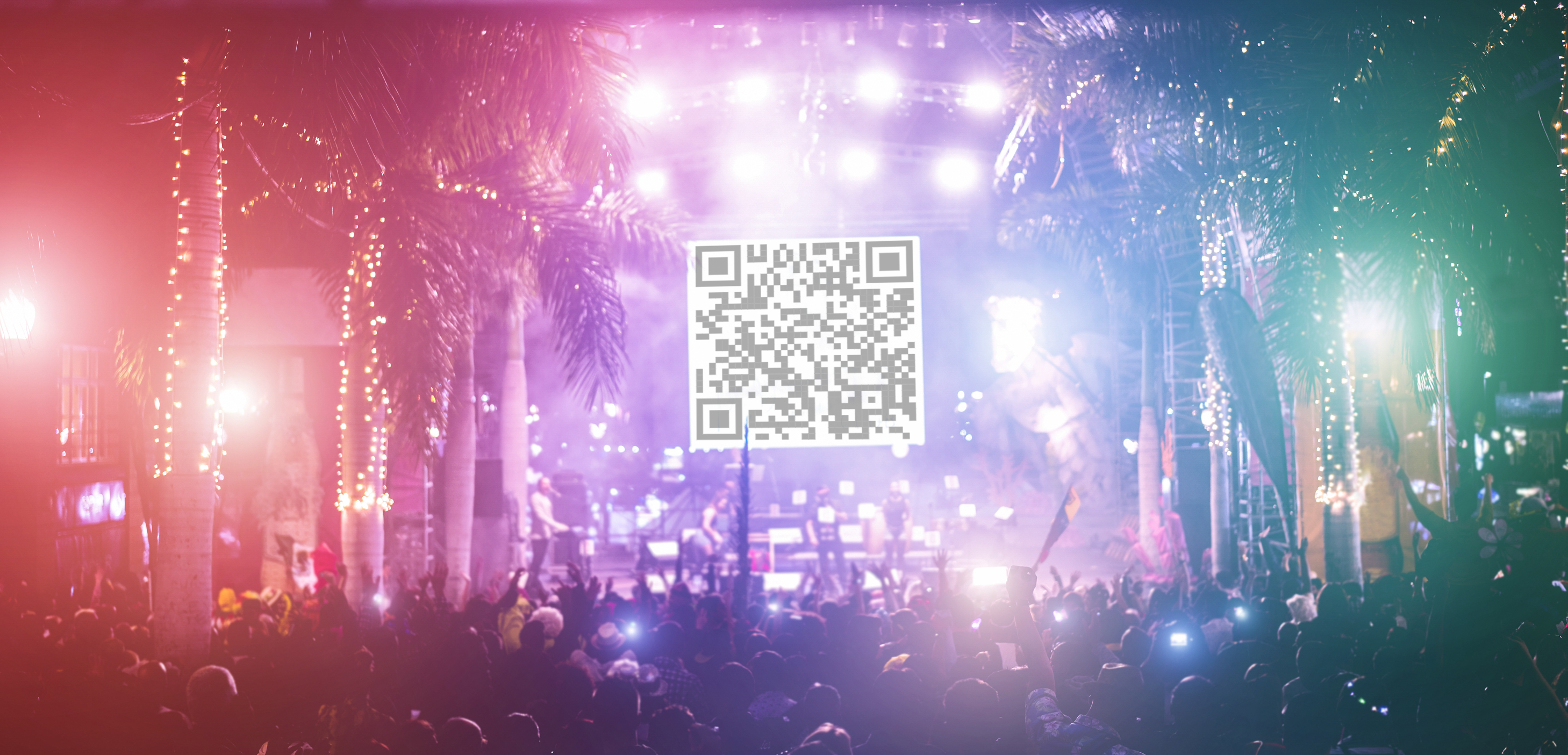
Concerts, Festivals & Live Entertainment
The jumbotron and PA model extends naturally beyond sports venues to any large-scale live entertainment environment:
Outdoor Music Concerts
Music concerts have abundant natural breaks between sets, during soundchecks, and during stage transitions. These are high-energy moments when the crowd is excited and receptive. A campaign displayed on stage screens during a set change — "Play while we wait for the next set" — reaches an audience that is energized and looking for something to do with their hands.
Prize structures that complement the concert experience resonate especially well: backstage pass upgrades, merchandise bundles, VIP area access for the next show, and meet-and-greet opportunities create aspirational prizes that fans are motivated to share on social media regardless of whether they personally win.
Comedy Clubs & Theater
Smaller live entertainment venues — comedy clubs, theaters, cabaret shows — offer more intimate campaign windows. Intermission is ideal: the house lights are up, guests are at the bar or in their seats, and a well-crafted campaign prompt from the host creates a communal game experience that feels like part of the show. Prizes that extend the entertainment experience (tickets to the next show, dinner reservations at the venue's restaurant) are particularly effective here.
Boxing, MMA & Combat Sports
Combat sports events have long breaks between bouts, during which the audience is captive and restless. A campaign window during a preliminary bout intermission — especially one supported by the arena PA system — reaches a highly engaged audience with time to spare. Prize structures that include premium seating upgrades, ringside access, or post-event meet-and-greet opportunities align perfectly with the aspirational nature of the fan base.
Reward Ideas That Drive Post-Event Action
The most strategically valuable reward structure for live event campaigns is one that brings the fan back. A prize that's consumed at the event (a free hot dog, a drink coupon) has immediate value but no long-term return. A prize that requires a future visit creates the next transaction:
- For casino sponsors: Free play credits, comped dining, priority seating at the next event — all requiring a visit to the casino property to redeem
- For the venue itself: Ticket discounts to the next home game, premium seat upgrades for a future event, parking passes for the next visit
- For retail or restaurant sponsors: Gift cards, dining credits, or merchandise discounts redeemable at a specific location — with a time limit to drive urgency
- For entertainment sponsors: Priority access to future events, early entry passes, or exclusive merchandise not available for general purchase
Technical Considerations
Running a campaign at a large live event requires some technical planning:
- Network capacity: When thousands of fans scan simultaneously, your campaign page will receive a surge of traffic. Promo on Demand's infrastructure is built to handle this — but ensure your campaign page URL does not route through any internal network that might have bandwidth limitations.
- Venue Wi-Fi vs. cellular: Large venues often have congested Wi-Fi networks. Campaign pages accessed over cellular networks typically perform better than those requiring venue Wi-Fi. Design your campaign's loading experience to be fast and lightweight for mobile connections.
- Jumbotron display specs: Work with the venue's production team to get your campaign slide in the correct resolution and format for their specific display system. Most large venues operate displays at 4K or higher; your QR code graphic should be exported at sufficient resolution for this display size.
- Preview testing: Test the campaign QR code by displaying it on your own TV at home and scanning from the expected distance. If it scans reliably from 15 feet on a 55-inch screen, it will work on a jumbotron at distance.
Getting Started
Planning a live event campaign deployment? Here's your preparation checklist:
- Confirm the event and identify the activation window (halftime, between periods, pre-game)
- Coordinate with the venue's event production team on jumbotron display specifications and time slots
- Create your Campaign in Promo on Demand and configure your prize pool — include prizes that drive a return visit
- Design your jumbotron graphic: large QR code, brief headline, countdown timer, and prize teaser
- Script your PA announcement to run simultaneously with the display
- Brief any staff who will be circulating with tablets for supplementary employee-controlled plays
- Monitor the campaign dashboard in real time during the event
Interested in designing a live event activation for an upcoming game or concert? Contact our team — we'll help you build a campaign that turns your crowd into customers.