The moments immediately following a purchase are among the most psychologically significant in the customer relationship. A customer who has just bought something from you is in a state of elevated trust and positive association — they've committed, they're satisfied, and they're open to the next message from your brand. Most businesses waste this window with a generic receipt or a bland "thank you for your order" email.
Promo on Demand post-purchase campaigns transform that moment into something customers genuinely remember. Instead of a routine receipt, they receive an invitation to play a game and discover what they've won. The game extends the positive experience of the purchase into something actively enjoyable. The prize creates a concrete incentive to return. And the entire experience takes less than two minutes — seamlessly attached to a transaction that was already happening.
The psychology of post-purchase rewards: Customers who receive an unexpected reward immediately after a purchase report significantly higher satisfaction scores than those who receive the same reward in advance. The timing matters — a surprise reward at the moment of satisfaction amplifies positive emotions and strengthens the association between the purchase and the positive feeling.
The Post-Purchase Moment
Think about what happens in the seconds and minutes after a customer completes a transaction. They're processing the experience: Did I make a good decision? Do I feel good about this purchase? Is this brand worth returning to? These questions are subconscious, but they're being answered in real time based on every cue the business sends in that window.
A receipt that includes "Scan here to see what you've won" sends a powerful cue: this business values me enough to give me something extra. That subconscious message — "this business is generous, it treats its customers well, it's worth coming back to" — is more effective at driving repeat business than almost any other marketing investment you can make. You're not fighting for attention in a crowded inbox or on a busy social feed. You're speaking to a customer who is already engaged and already primed to think positively about your brand.
Receipt-Based Campaigns
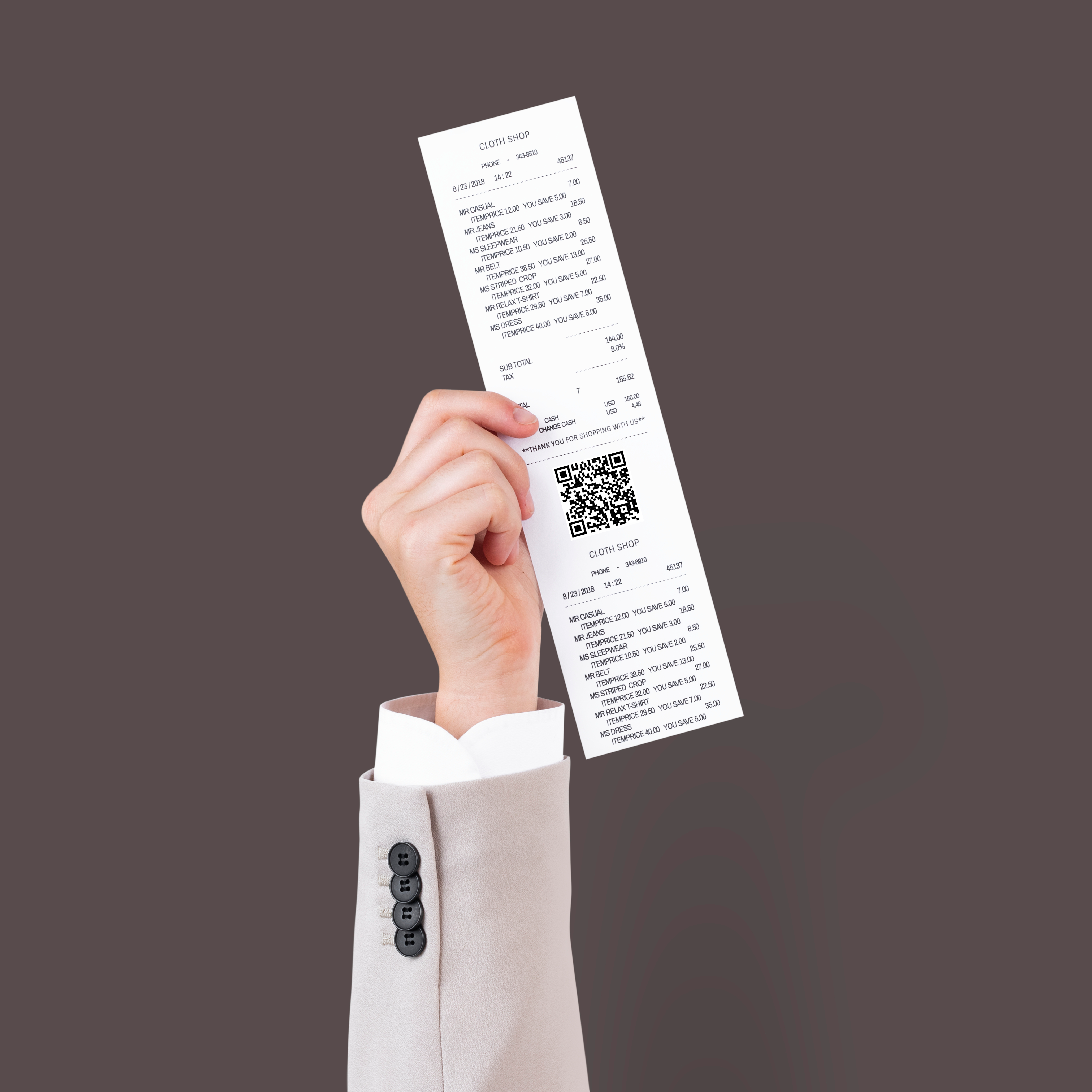
The printed or digital receipt is the most universal post-purchase touchpoint in retail, food service, and hospitality. Every customer who completes a transaction receives one — which means a receipt-based campaign has 100% reach among purchasers, with no additional targeting or list-building required.
For printed receipts, the campaign QR code can be printed directly on the slip:
- Position the QR code prominently — not buried among fine print — with a brief, clear headline: "Scan to see what you've won!"
- Add a simple instruction: "Point your camera at this code and play to discover your bonus reward."
- Include the campaign URL as an alternative for customers unfamiliar with QR scanning
- Set a time limit for the reward ("Valid for 30 days") to create urgency without being restrictive
For digital receipts (email or SMS), the campaign link can be embedded directly in the receipt template:
- Use a large, high-contrast "Play Now" button that is immediately visible without scrolling
- Position the campaign prompt near the top of the receipt — don't bury it below itemized charges and tax calculations
- Keep the surrounding copy minimal: three to four words maximum before the button
One important consideration for receipt-based campaigns: configure your campaign to allow one play per transaction, not one play per customer per campaign period. Customers who make multiple purchases should be able to play multiple times — this rewards frequency and gives repeat visitors a reason to look forward to each transaction.
Email Follow-Up Campaigns
The post-purchase email — triggered automatically by your POS, e-commerce platform, or CRM — is one of the most read communications in marketing. Post-purchase emails consistently achieve open rates two to three times higher than standard marketing emails, because customers are actively looking for confirmation, order details, or next steps.
A campaign link embedded in a post-purchase email captures that elevated attention at its peak. The most effective approach is a dedicated "thank you and play" email — not a campaign link buried in a transactional receipt email — sent within 24 hours of the purchase:
- Subject line: "You bought [product] — see what else you've won" or "A little extra from us: your post-purchase surprise is waiting"
- Body: Brief, warm, and focused entirely on the game. Don't upsell, don't include product recommendations, don't clutter with navigation links. This email has one job.
- CTA: A single, prominent button: "Play Now" or "See What You Won"
- Personalization: Use one-to-one campaign mapping to ensure the prize reflects the customer's actual purchase tier or history — a customer who bought a $2,000 item shouldn't receive the same prize as someone who bought a $20 item
Auto Dealerships
Automobile purchases are among the highest-consideration, highest-involvement transactions in consumer commerce. A customer who buys a car has spent weeks researching, comparing, negotiating, and committing. When they finally drive off the lot, they want to feel celebrated. They want to feel like they made the right decision.
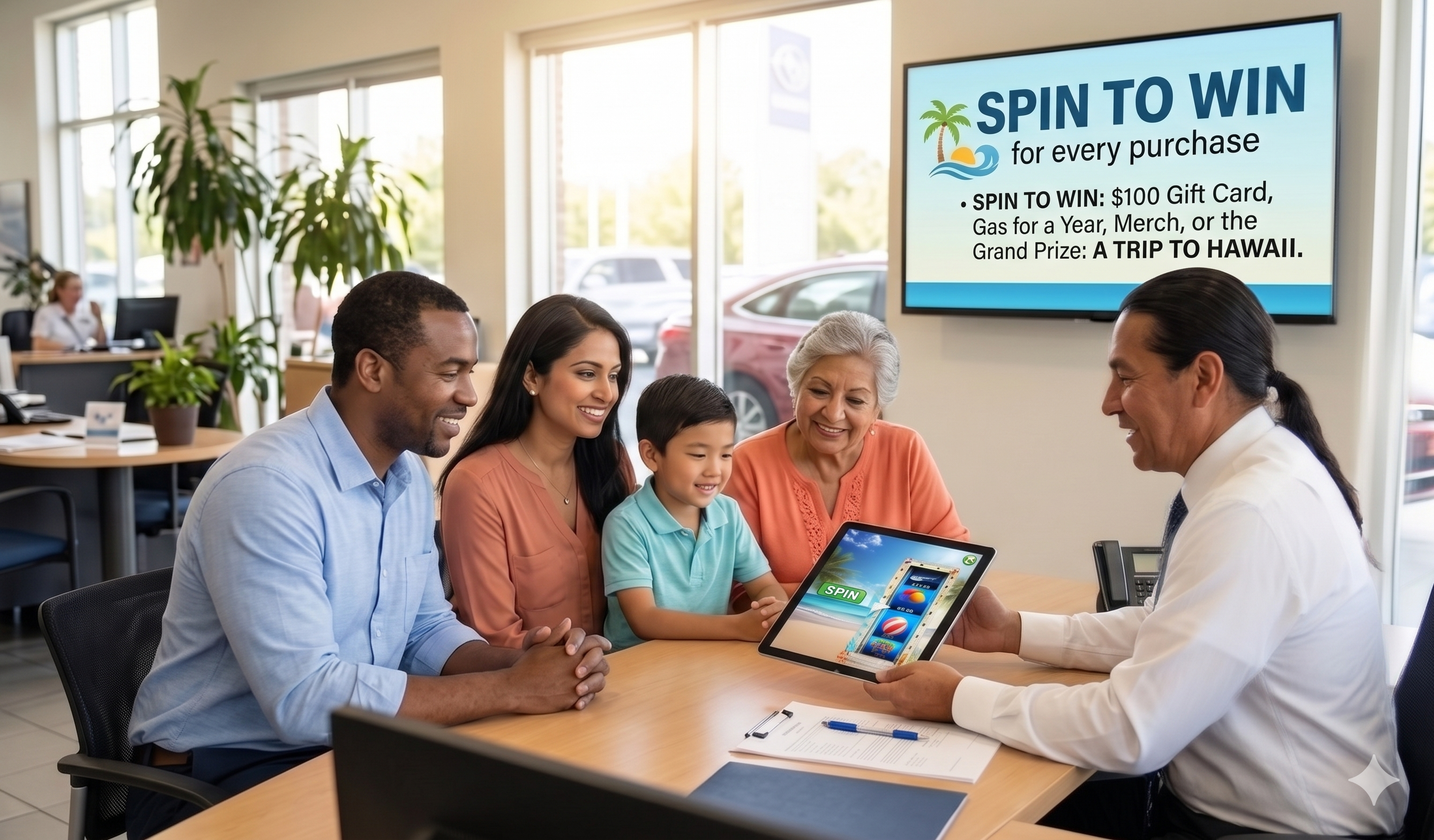
A post-purchase campaign at the auto dealership capitalizes perfectly on that desire for celebration. The finance office — where the customer is signing documents and waiting — is an ideal location for a QR code display: "While we prepare your paperwork, scan to see what you've won as a thank you for choosing us." The game happens in real time, in the showroom, with the entire buying team potentially watching. The prize reveal becomes part of the buying experience itself.
Prize ideas that resonate in the auto context:
- Free first oil change or service appointment
- Complimentary detail service on the new vehicle
- Extended warranty upgrade or roadside assistance package
- Gas card or driving accessories gift card
- VIP service lane priority for the first year
- Referral bonus — "Win $100 for every friend who buys"
For dealerships with multiple vehicle tiers, one-to-one campaign mapping allows different prize levels for different purchase prices. A luxury sedan buyer receives a premium prize; an economy vehicle buyer receives an entry-level reward. The game delivers the prize with equal excitement regardless of tier.
Retail Stores
In retail, post-purchase campaigns serve two goals simultaneously: they delight the customer in the moment and they create a specific, time-bound reason to return. The most effective retail post-purchase campaigns structure prizes as future purchase incentives:
- "Win 20% off your next visit — valid this month only"
- "Win a free accessory with your next purchase of $50 or more"
- "Win early access to our summer sale before it opens to the public"
- "Win a complimentary gift-wrapping upgrade on your next order"
The time limit is essential. An open-ended prize can be used "someday" — and someday often never comes. A prize valid for 30 days creates urgency without feeling pressuring, and 30 days is long enough to feel generous while short enough to drive near-term action.
For multi-category retailers, consider structuring the prize pool to include rewards relevant to product categories the customer hasn't purchased yet. A customer who bought a running shoe and discovers a prize for the fitness apparel section is being introduced to an adjacent category in the most pleasant way possible — through a reward.
Restaurants & Hospitality
Restaurants face a specific retention challenge: the post-dining experience ends the moment the customer walks out the door, and there's no natural moment of follow-up in the traditional dining model. Post-purchase campaigns create that follow-up touchpoint, transforming the check into a conversation starter.
The bill presenter — the small folder in which the check and payment are returned — is a natural home for a QR code card. Diners who are waiting for their card to be processed have time and attention for a game play. The experience transforms a potentially awkward wait (for the card to come back) into a fun, engaging moment.
Prize structures that work in the restaurant context:
- Complimentary dessert on next visit
- Free appetizer with entrée on return visit
- Wine or cocktail credit on next reservation
- Priority seating or reservation preference for a specified period
- Complimentary birthday dessert booking
- Discount on catering or event services
Casual dining concepts might also consider printing QR codes directly on the back of receipts, table tents (see our dedicated article on table tent campaigns), or on take-away packaging — extending the post-dining game play window to the customer's home.
Service Businesses
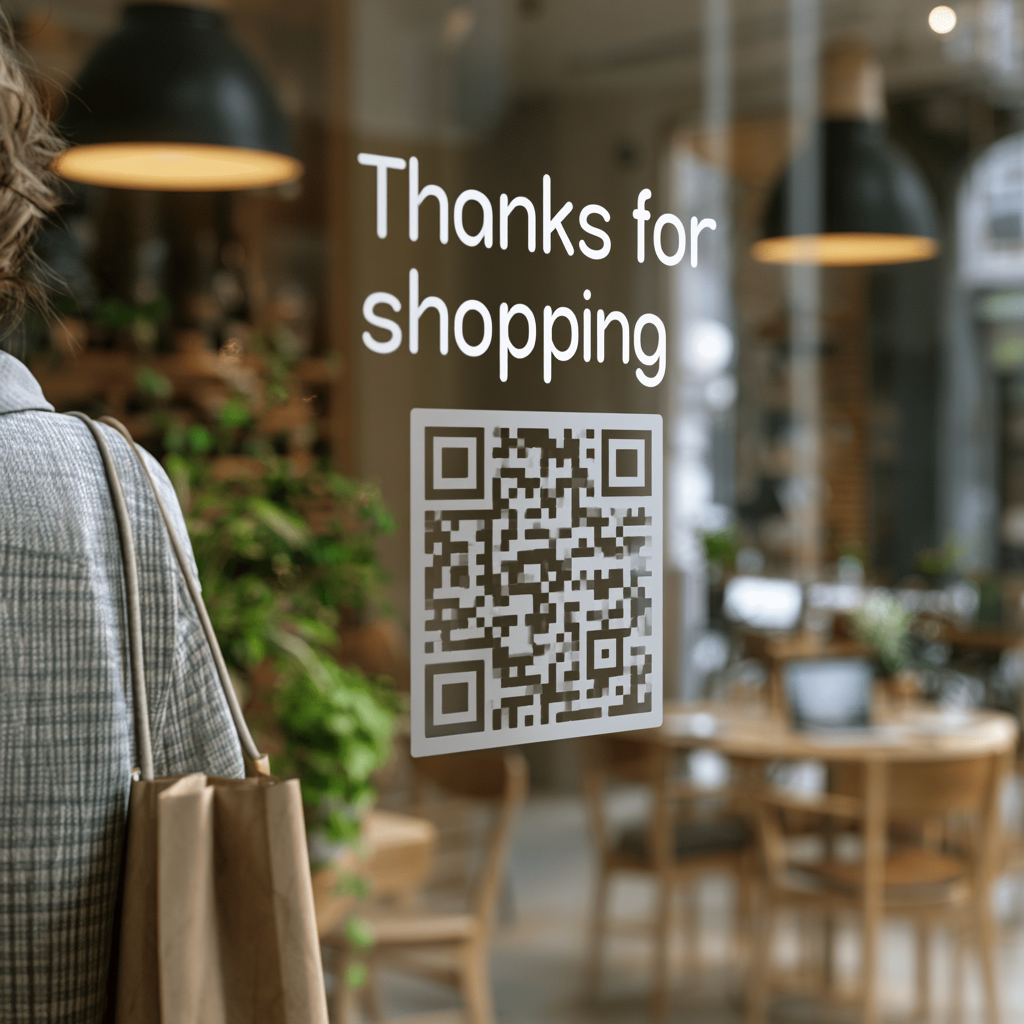
Service businesses — hair salons, spas, auto repair shops, medical offices, veterinary clinics, and similar providers — have a particularly strong case for post-purchase campaigns because repeat visits are the entire business model. A customer who just received a great haircut is in an excellent mood and already thinking about when they'll need to come back. A campaign prize that rewards a rebook — "Win 20% off your next appointment when booked today" — converts that intention into a confirmed future visit.
For healthcare-adjacent services (dental, chiropractic, physical therapy), prizes that support wellness goals align naturally with the service context: wellness product discounts, fitness class partnerships, referral bonuses for family members. The prize feels like an extension of the care, not a purely commercial transaction.
In professional services like financial advising, legal, or accounting, where direct discounts may be inappropriate, consider prizes that add value without discounting the core service: complimentary consultation on an adjacent service, priority scheduling during busy seasons, or exclusive access to educational resources or events.
One-to-One Reward Mapping
The most sophisticated post-purchase campaigns use Promo on Demand's one-to-one customer mapping feature to deliver prizes that reflect each customer's individual purchase history, spend level, or loyalty status. Instead of random odds, each customer is guaranteed a specific prize tier determined by pre-loaded mapping data.
Practical applications of one-to-one mapping in post-purchase contexts:
- Spend-based tiering: Purchases over $500 win a premium prize; purchases $100–$499 win a mid-tier prize; purchases under $100 win a base-level prize
- Loyalty status tiering: Gold-tier members win one prize; Silver-tier members win another; new customers win a welcome reward
- Category-based customization: Customers who bought in a specific product category receive a prize relevant to that category — increasing both relevance and the chance of a return purchase in the same category
- Frequency-based escalation: First-time buyers receive a welcome prize; repeat buyers receive an escalating reward that acknowledges their loyalty history
Keeping the Loop Going
The real power of post-purchase campaigns is their role in a longer relationship cycle. Each campaign play creates a contact record, a prize memory, and a return visit opportunity. Each return visit creates a new purchase. Each new purchase triggers a new campaign. The campaign becomes the glue between transactions — the consistent, enjoyable touchpoint that turns a one-time buyer into a repeat customer.
Design your campaigns with this cycle in mind:
- Refresh your campaign regularly — a customer who plays the same game every time they visit will eventually stop scanning. Rotate games and prize structures seasonally.
- Escalate rewards for frequent returners — use loyalty data to identify repeat visitors and ensure their prize tier reflects their value
- Track the conversion rate of prizes to return visits — which prize types generate the most rebooking? Double down on those.
- Build toward a big moment — monthly drawing campaigns where each post-purchase play earns a drawing entry create long-term engagement and anticipation across multiple visits
Getting Started
Launching a post-purchase campaign is one of the fastest paths to getting value from Promo on Demand because it requires no new physical footprint — just your existing transaction touchpoints. Here's how to begin:
- Choose your primary touchpoint: receipt QR code, follow-up email, or both
- Create your Campaign in Promo on Demand — configure a prize pool that drives return visits
- Generate the QR code and embed the campaign link in your receipt template or email system
- Configure play frequency to match your transaction model (one play per transaction, or one per period)
- Run for 30 days, measure your return visit rate among campaign players vs. non-players, and adjust the prize structure based on results
Ready to turn every transaction into a loyalty-building moment? Contact our team to discuss the best post-purchase campaign setup for your business type.