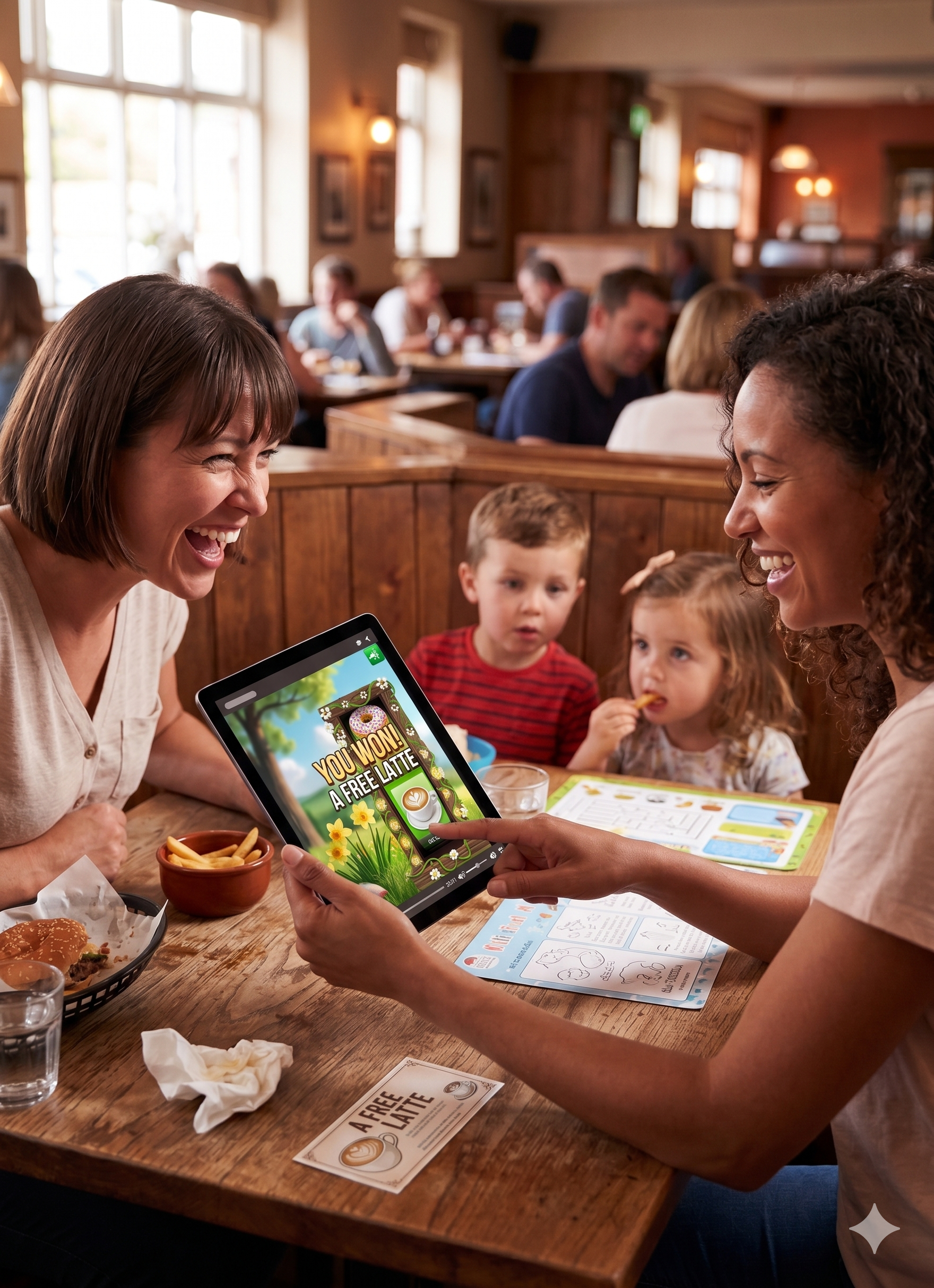
There is a quiet, underutilized marketing moment that happens millions of times a day in restaurants, casinos, hotel bars, and dining rooms around the world: the wait. The wait for the server to arrive. The wait for food to be prepared. The wait between ordering and the first course. The wait at a slot machine between spins while a conversation pauses. These dwell-time windows — often five, ten, or even twenty minutes in length — represent some of the most captured, receptive, and undistracted attention available in the consumer experience.
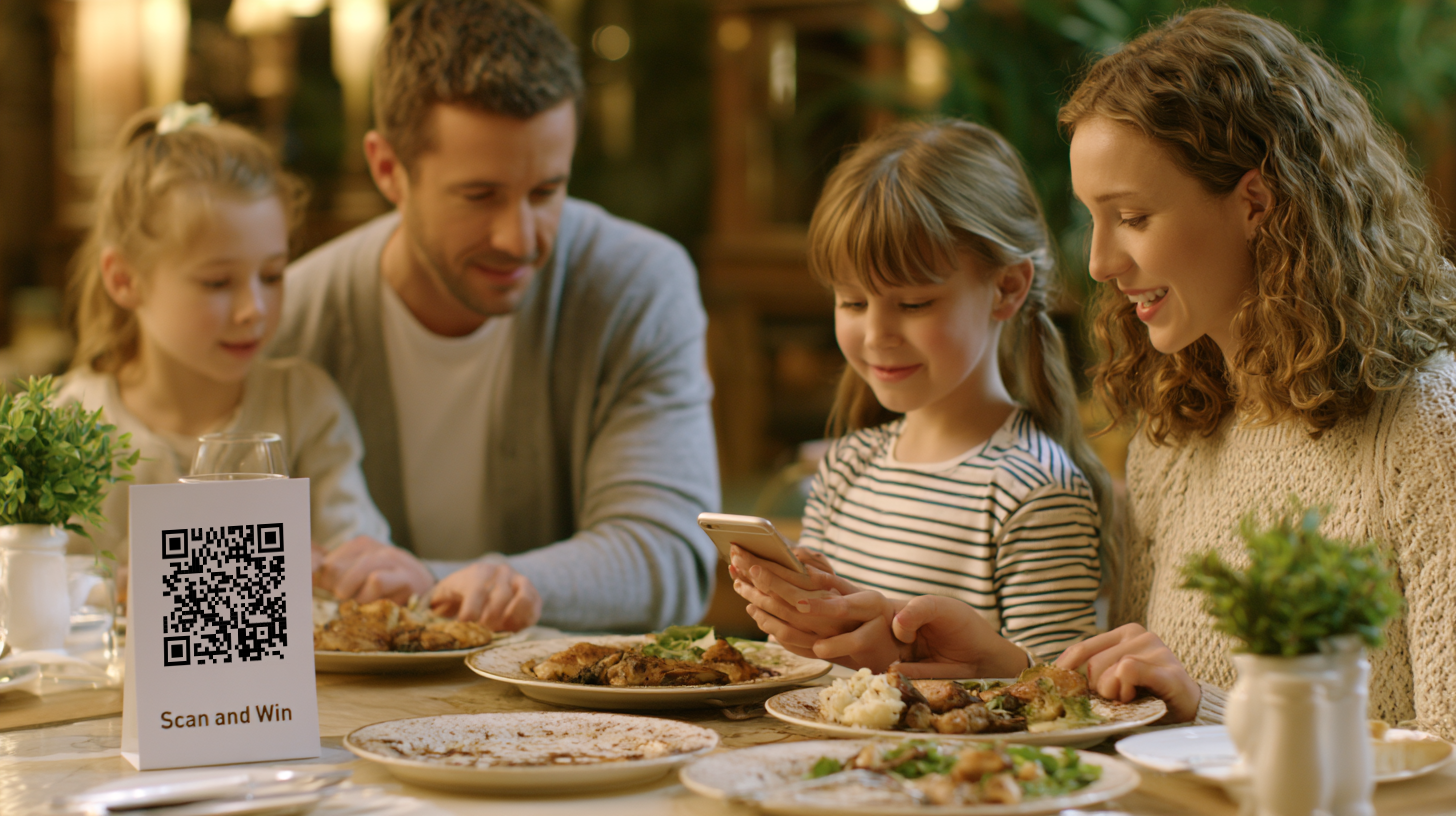
A well-designed table tent campaign from Promo on Demand fills that window with something genuinely engaging. Guests scan a QR code, play a game, discover a prize, and spend the rest of their visit with a reason to feel positive about your brand — and a concrete incentive to return. It's engagement that costs nothing extra per deployment and runs itself entirely through the guest's own device.
The dwell-time advantage: Restaurant guests spend an average of 45 to 90 minutes at the table. Casino players may sit at a machine or table for hours. This extended, voluntary presence is an extraordinary gift to marketers — the challenge is simply providing something worth doing with it. A two-minute game play that rewards the guest with a tangible prize is the ideal answer.
The Dwell-Time Opportunity
Dwell time is one of the most valuable concepts in physical-space marketing, and it's consistently underexploited. Businesses invest in customer acquisition — getting people through the door — and often spend very little effort on what happens once the customer is already seated and waiting. Table tents have historically been used for low-engagement purposes: dessert menus, drink specials, event announcements. All of these compete for the same moment of attention, and most fail to generate any meaningful engagement.
A campaign QR code changes the value proposition of the table tent entirely. Instead of passively displaying information, the table tent becomes an interactive portal — an invitation to a rewarding experience that the guest can accept or ignore, but that consistently outperforms passive display content when measured by guest response and return visit rates.
The math is compelling. If a restaurant turns 50 tables per day and each table tent campaign generates even a 20% scan rate, that's 10 game plays per day — 300 per month — from guests who are already in the building, already in a positive mindset, and already predisposed to return if given the right reason.
How Table Tent Campaigns Work
The mechanics are simple. You create a Campaign in your Promo on Demand admin dashboard, configure your prizes and game selection, and generate the campaign QR code. That code is then printed on your table tents — either by updating your existing table tent artwork or by adding a simple QR code card insert to existing holders. Guests who are curious scan with their phone's camera, play the game, and discover their prize.
The experience is entirely self-contained on the guest's device. No app download required. No account creation required unless you want to capture contact information. No staff involvement beyond optionally mentioning the tent when seating the table: "By the way, we have a game you can play while you wait — scan the card on the table."
Campaign configuration options particularly relevant to the table tent context:
- Daily play frequency: Allow guests to play once per day — so frequent visitors have a reason to scan on every visit, not just their first
- Odds-based prizes: A mix of prize tiers (small, medium, and large rewards) keeps every play exciting — guests never know what they'll win, which maintains anticipation across multiple visits
- Campaign scheduling: Run different campaigns during different dayparts — a lunch campaign with lighter prizes, a dinner campaign with premium rewards — to match your revenue targets for each service period
- Contact capture: Optionally require guests to enter their email or phone number to claim their prize — building your marketing list from your most engaged guests
Casino Table Game & Slot Applications
In casino environments, the table tent concept adapts naturally to both electronic and physical gaming areas. The applications here are particularly rich because casino guests often have extended sessions — providing abundant time and multiple opportunities for engagement.
Slot Machine Areas
Small table-style display stands or card holders positioned near slot machine banks — especially in high-traffic areas like change machine clusters, smoking lounge edges, or machine end-caps — can display campaign QR codes to players between spins or during natural breaks. Unlike hot seat programs (which require staff involvement), these passive displays generate game plays autonomously without any floor team coordination.
Consider seasonal or time-sensitive campaigns displayed in these areas: "Play our daily wheel game for a chance to win $50 free play — available today only." The urgency drives immediate engagement; the free play prize drives table usage.
Table Games
While active play at a table game doesn't offer the same hands-free window as a restaurant table, there are natural dwell-time opportunities at table games as well: players waiting for a shoe change, a dealer rotation, or a brief pause between hands have thirty to sixty seconds in which a phone-based game play is entirely feasible. A campaign card displayed at the chip rack or embedded in the felt-side table display creates a touchpoint during these natural pauses.
Casino Bars & Lounges
Casino bars and lounges are among the best environments for table tent campaigns within a gaming property. Guests are seated, relaxed, and have their phones in hand. The ambient energy is social rather than competitive, making a game play feel like entertainment rather than promotion. Prize structures that bridge the bar and the gaming floor — "Win free play to use at any slot machine" — drive guests from the bar into the casino, increasing gaming revenue from a touchpoint that primarily serves a beverage function.
Restaurant & Bar Deployments
Beyond casino properties, the table tent format is a natural fit for the full spectrum of food and beverage venues:
Full-Service Restaurants
The waiting period between ordering and food arrival is the highest-engagement window in the dining experience. Guests have nothing to do but talk and look around — and a game invitation is almost always well-received as a welcome distraction. Prize structures oriented toward return-visit incentives (discount on next visit, free appetizer on return, priority reservation access) are particularly effective because they're redeemable only on a future occasion, directly driving repeat business.
For family dining concepts, design campaigns that are universally engaging across age groups — simple, visually dynamic games that a parent and a ten-year-old can enjoy together. Prizes that resonate with families (free dessert, birthday meal discount, kids' meal voucher) drive the highest redemption rates in this demographic.
Quick Service & Fast Casual
In quick-service and fast-casual environments, the game play window is shorter — typically five to fifteen minutes. This requires a fast, high-impact campaign experience. Single-game campaigns with immediate reveal mechanics (spin the wheel, flip the card) are better suited to this format than multi-step game progressions.
Counter displays and tray liners — in addition to or in place of traditional table tents — are effective touchpoints in counter-service environments where physical tables may not always be occupied. A QR code displayed at the pickup counter or embedded in the packaging creates a campaign touchpoint even for guests who take their meal to-go.
Bars & Cocktail Lounges
Bars offer extended dwell time and a social atmosphere that's particularly receptive to game-based engagement. A campaign that runs during happy hour — with prizes that incentivize return visits during less crowded periods — drives both in-the-moment engagement and long-term traffic management. Prizes like "Win free entry to our Thursday trivia night" or "Win a reservation at our weekend brunch" move traffic from high-demand periods to under-utilized dayparts.
Hotel Lobby & Room Placements
The table tent concept travels naturally beyond food and beverage into hotel lobbies, resort common areas, and guest room amenity cards. Hotel guests — particularly those on leisure trips — have abundant downtime during which a game play offer is genuinely welcome. Consider these placements:
- Guest room keycard holders: A QR code on the keycard holder is seen at room entry, at bedtime, and at checkout — three natural moments of engagement during every stay
- Lobby coffee service: A campaign card display near the complimentary coffee station reaches guests in their most relaxed and receptive daily moment
- Pool and spa areas: Sun loungers and spa waiting areas are extended-dwell environments where phone-based games are a natural fit
- Elevator lobbies: Brief wait times in elevator lobbies create micro-engagement opportunities — a QR code display positioned at eye level with a simple "Play before you head out" message reaches every guest heading in and out
Reward Ideas That Work at the Table
The prize structure you choose for a table tent campaign should feel meaningful relative to the context — not so trivial that guests dismiss it, not so large that it strains your margin. Here are the most effective prize tiers by venue type:
- Restaurants — low tier: Free soft drink refill, bread basket, or dessert item (current visit); 10% off appetizer on next visit
- Restaurants — mid tier: Free appetizer or dessert on next visit; priority seating on return
- Restaurants — premium tier: Complimentary entrée on return visit; private dining reservation
- Casinos — low tier: $5–$10 free slot play; free bingo cards; entry in monthly cash drawing
- Casinos — mid tier: $25–$50 free play; complimentary dining credit at the buffet or restaurant
- Casinos — premium tier: $100+ free play; spa credit; hotel room upgrade; show tickets
- Bars — all tiers: Free drink with purchase; discount on a premium spirit; access to a private tasting event
Driving Return Visits
The table tent campaign's highest-value function is not immediate prize delivery — it's the creation of a concrete reason to return. Design your prize structure so that the majority of prizes require a future visit to redeem. This creates a loop:
- Guest scans and plays on Visit 1
- Guest wins a prize redeemable on Visit 2
- Guest makes Visit 2 to redeem — and scans the table tent again
- Guest wins a prize redeemable on Visit 3
- The cycle reinforces loyalty as a habit rather than an intention
For casino properties, free play prizes are the perfect return-visit driver: the credit lives in the player's account until they come back to the property to use it, and the act of returning to play the free credit almost always results in additional gaming beyond the credit itself. The campaign prize effectively subsidizes a guaranteed return visit.
Design Tips for Table Tents
The physical design of your table tent directly affects scan rates. Here are the creative and production principles that consistently drive the highest engagement:
- Feature the QR code front-and-center: Don't bury it on the back panel or in the footer. The code should be the visual focal point of at least one panel.
- Use action language: "Scan to Win" outperforms "Visit our website." "See what you've won" outperforms "Learn more." Every word should be oriented toward immediate action.
- Show a prize preview: If your prizes include something visually appealing — a free meal, a prize check, a spinning wheel graphic — show it. Visual reward cues increase scan intent.
- Brand consistently: The table tent should match your venue's visual identity. A game that looks like it belongs to your brand creates more trust than a generic promotional insert.
- Keep it simple: Resist the urge to add promotional copy, social media handles, and newsletter sign-up prompts to the same tent. One message, one action. Complexity kills conversion.
- Use durable materials: Table tents are handled constantly. Laminated cards, heavy-weight stock, or acrylic holders protect your investment and maintain a professional appearance through repeated use.
Getting Started
Table tent campaigns are one of the fastest and lowest-cost ways to begin generating value from Promo on Demand's Campaign system. Here's a practical launch path:
- Create a Campaign in your Promo on Demand admin dashboard — configure prizes that drive return visits
- Download your campaign QR code at print resolution
- Work with your print vendor or in-house design team to produce table tent inserts or full replacements incorporating the QR code
- Brief your floor staff on the campaign — they should be ready to mention it when seating guests
- Run the campaign for 30 days, then review scan rates, prize redemption, and return visit frequency to refine your approach
Questions about the best campaign structure for your restaurant or casino? Contact our team — we'll help you design a table tent program that turns every table into a loyalty-building touchpoint.